Huawei was once the camera phone brand to beat, with amazing models like the Mate 20 Pro and Huawei P30 Pro impressing with their ability — and setting significant trends in motion.
But over the past years, it has struggled to compete with Samsung and Google — and more recently with brands like Xiaomi. However, there’s something different about the new Huawei P60 Pro.
The company has been working on its XMage camera system since the partnership with Leica ended, and it’s now beginning to become a real competitor. To find out if Huawei is about to regain some of the ground it lost in camera supremacy, we tested the P60 Pro against the Google Pixel 7 Pro. Here’s what happened.
This is the Huawei P60 Pro
Huawei has announced the P60 Pro for global release, so what’s the phone itself like? It has a 6.67-inch OLED screen with a variable 1Hz to 120Hz refresh rate, plus a quad-curve body with a choice of two finishes — matte black or the stunning Rococo Pearl seen in our photos. The phone is powered by a Qualcomm Snapdragon 8+ Gen 1 processor with a 4G modem, and the 4,815mAh battery has 88-watt wired charging and 50W wireless charging.
The Huawei P60 Pro will be released on May 22 in the U.K., but pre-orders begin on May 9 through Huawei’s online store and some retailers. The basic 8GB/128GB version in black costs 1,200 pounds (about $1,515 U.S.), while the 12GB/512GB Rococo Pearl model is 1,399 pounds (about $1,767). A U.S. release is extremely unlikely. You can buy the Google Pixel 7 Pro today in the U.S. for $899 (or 849 British pounds in the U.K.)
Huawei P60 Pro vs. Pixel 7 Pro camera specs
The Huawei P60 Pro has three cameras on the back: its main 48-megapixel Ultra Lighting camera, a 48MP RYYB telephoto camera for a 3.5x optical zoom, and a 13MP wide-angle camera. A 10-channel spectrum sensor is also on board, along with a feature where you can manually shift between an f/1.4 and f/4.0 aperture. We also saw this on the Mate 50 Pro and something similar on the Xiaomi 13 Ultra.
Huawei has worked to improve lowlight performance, with the P60 Pro’s main camera taking in 3x more light than the P50 Pro for more detail in dark areas, fewer artifacts, and more balanced colors. There’s a three-axis anti-shake system for more stable shots, a macro mode, and a maximum of 200x zoom.
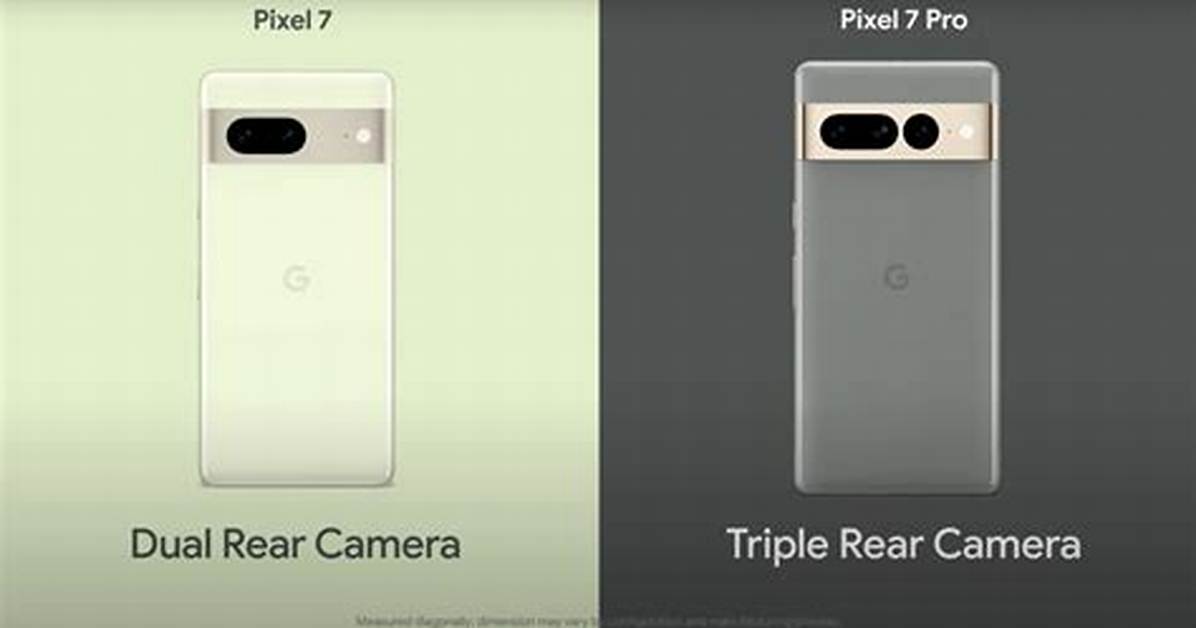
The Google Pixel 7 Pro has been around for a while now and is recognized as a brilliant camera phone. It has a 50MP main camera, a 48MP telephoto camera for a 5x optical zoom, and a 12MP wide-angle camera. It also has a spectral sensor, laser autofocus, and optical and electronic image stabilization.
We only had a few hours with the Huawei P60 Pro, so this test isn’t as comprehensive as some of our other comparisons, where we take photos over the course of multiple days and in different environments. Here, the photos were taken over one evening and some on the following morning. For example, we didn’t test out the macro or manually adjustable aperture. However, the main cameras got a serious workout, and we can still come to a satisfactory conclusion.

