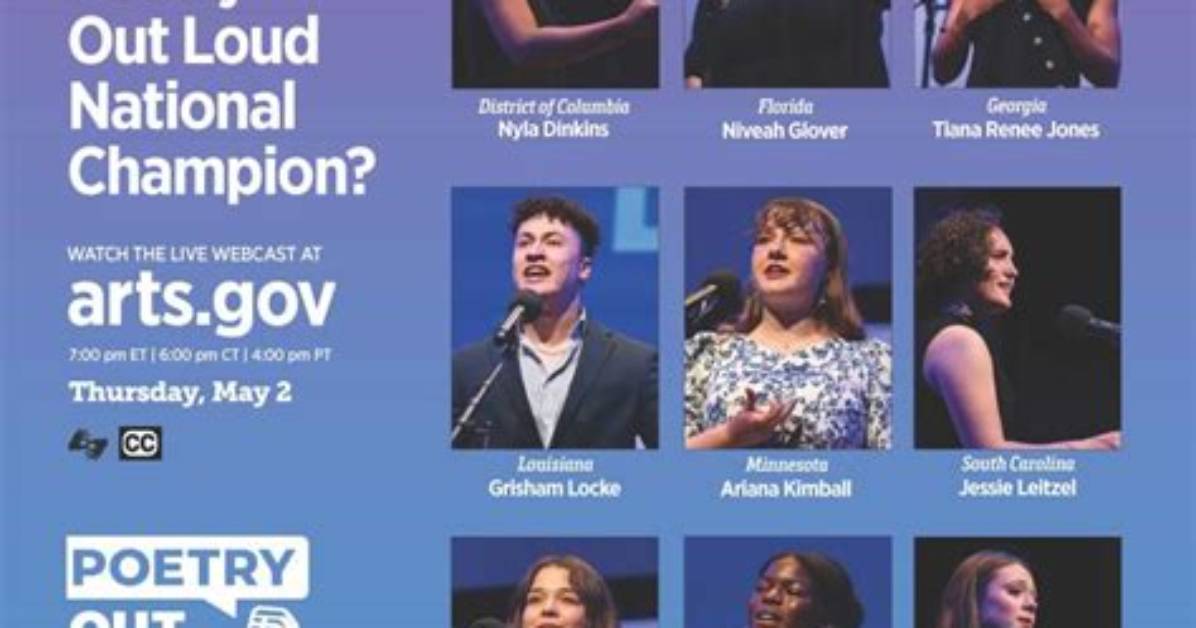
Poetry Out Loud is an exciting program that encourages high school students to engage with poetry in a dynamic and expressive way. This initiative not only enhances students' appreciation for literature but also develops their public speaking skills. In this article, we will delve into the origins, structure, and impact of Poetry Out Loud, as well as provide insights into how students can excel in this enriching competition.
As a platform for students to explore their creativity, Poetry Out Loud invites participants to recite poems from an extensive anthology. This program has gained momentum across the United States, with schools and communities rallying to support their young poets. Through this journey, students not only discover the beauty of language but also build confidence in their ability to perform in front of an audience.
In addition to celebrating the art of poetry, Poetry Out Loud fosters a sense of community and collaboration. Students share their interpretations and perspectives, creating an environment where diverse voices can be heard. This article will provide a comprehensive overview of Poetry Out Loud, including its history, benefits, and tips for participants, making it an invaluable resource for educators and students alike.
1. The History of Poetry Out Loud
Poetry Out Loud was created in 2005 by the National Endowment for the Arts and the Poetry Foundation to encourage the study of poetry in schools. The program was designed to help students appreciate poetry through memorization and performance. The initiative quickly gained traction, and by 2006, it was launched in all 50 states.
Since its inception, Poetry Out Loud has reached millions of students. The program's success can be attributed to its engaging format, which allows students to connect with poetry on a personal level. Through the years, the event has evolved, incorporating digital resources and online competitions to adapt to the needs of modern education.
2. Structure of the Competition
The Poetry Out Loud competition consists of several tiers: classroom, school, state, and national levels. Each level is structured to encourage students to select, memorize, and perform poems from a provided anthology. Here’s a breakdown of the competition structure:
- Classroom Level: Students recite poems in their classrooms, with teachers selecting the best performers to advance.
- School Level: Winners from the classroom level compete in a school-wide contest, with judges evaluating their performances.
- State Level: The top performers from each school advance to state competitions, where they compete for a chance to represent their state at the national level.
- National Level: The top performers from each state compete in a national championship, showcasing their talent on a larger stage.

