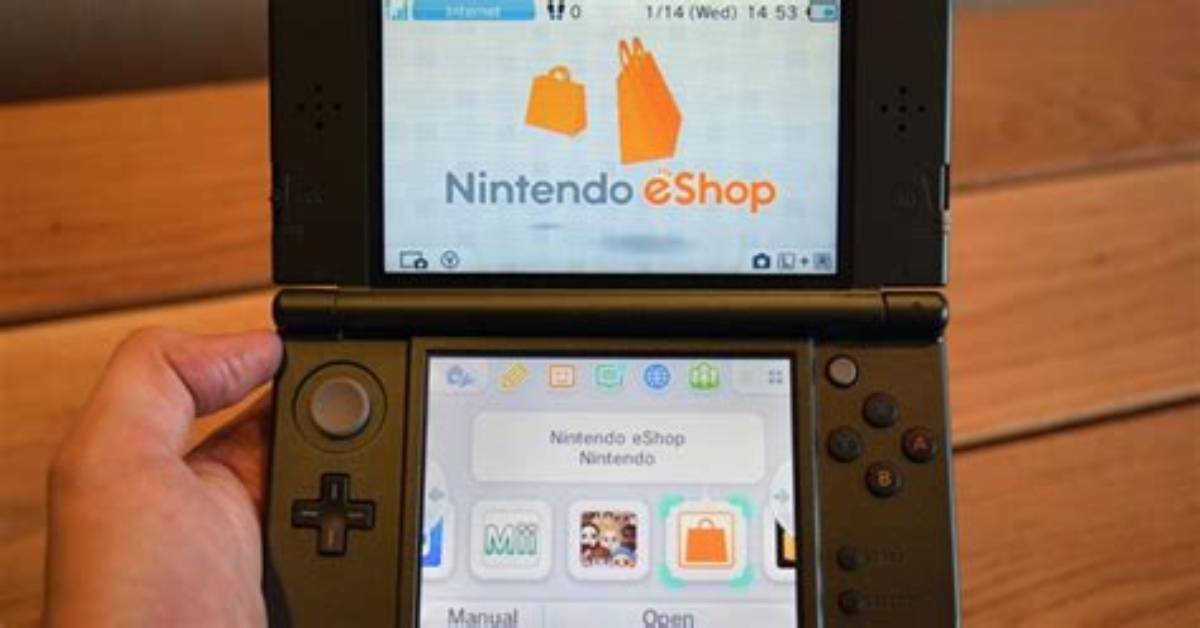
The 3DS eShop is no longer allowing Nintendo fans to make new game purchases, marking the end of a long era of DS-branded handhelds. Not only that, but it’s also sunsetting a vibrant indie community in the process. After helping smaller developers break through with WiiWare and DSiWare, the 3DS eShop was where indies really started to flourish on Nintendo consoles. Multiple games and developers built success stories on the platform, starting series that are still recognized in the eyes of Nintendo fans and stand as some of the 3DS’ most iconic games.
Within a year of the eShop’s launch, WayForward’s Mighty Switch Force provided one of the system’s best 3D experiences, Renegade Kid’s Mutant Mudd showed the potential of a platformer where players can hop between the foreground and background, and Hörberg Productions’ Gunman Clive provided a short, sweet, and cheap throwback platformer experience with lots of styles. By 2014, Yacht Club Games’ Shovel Knight had cemented itself as one of the best indie games of all time on the 3DS. Titles like that gave the 3DS a reputation as a haven for smaller developers. a platform where they could break out of a niche and connect with a larger audience.
When reflecting on the end of the 3DS era in interviews with Digital Trends, the developers of these games made it clear that the 3DS eShop served as a launchpad for the start of a golden age for Nintendo indies and that, even now, Nintendo could stand to learn something from how it treated indies on the now-defunct digital storefront.
Why 3DS?
While the Nintendo 3DS would become a thriving home for intendent creators by the end of its life span, that wasn’t always the case. It’s no secret that the earliest days of the handheld’s life were rough; the eShop itself didn’t even exist until June 2011, a few months after the system released. As Gunman Clive creator Bertil Hörberg points out, 3DS also wasn’t the easiest system to bring games to.
“With the 3DS being a very specialized piece of hardware with a comparatively slow CPU, there was no support for big middleware engines like Unity or Unreal, making it impossible for most indies to bring over their games,” Hörberg tells Digital Trends.
Despite those issues, within a year of the eShop launch, games such as Mighty Switch Force, Mutant Mudds, and Gunman Clive had all made a name for themselves as prominent 3DS indies. WayForward, Renegade Kid, and Hörberg Productions — the respective developers behind those games — took a major risk by releasing games on the 3DS eShop early on. Why bother with that when there were much easier systems to work with at the time? Everyone I spoke to referenced their love for Nintendo as an encouraging factor to make games for the system. For WayForward and Renegade Kid, they say that it was a no-brainer evolution of relationships started on previous Nintendo platforms.
It was a bit more of a risk for Hörberg, who didn’t have any previous experience working with Nintendo and didn’t have much data on how 3DS indies performed on the eShop. In fact, Gunman Clive, a simple 2D platformer with a distinct sketch-like art style, originated as a mobile game.
“The first Gunman Clive was originally released on smartphones, but that’s never been a preferred gaming platform for me,” Hörberg explains. “I’ve always had a love for Nintendo handhelds, so after some moderate success on mobile, I felt confident enough to apply to become a licensed Nintendo developer back when they were a bit more stingy about who was able to get devkits. Initially, I wasn’t sure if Gunman Clive would work on 3DS … but all of those concerns were quickly erased as I started working on the port, and the game ran beautifully on the little handheld.”
Each pixel in the game was one pixel on the screen.
Yacht Club Games lagged a bit behind these other teams, bringing Shovel Knight to Kickstarter in 2013 before releasing it on Wii U and 3DS in June 2014. Yacht Club’s founders had spun off from WayForward (some even worked on Mighty Switch Force), but still took a calculated risk prioritizing 3DS and Wii U instead of PlayStation 4 and Xbox One. What was the biggest draw to working on 3DS? Yacht Club’s resident artmancer Nick Wozniak tells Digital Trends it was to make a game in stereoscopic 3D and lower resolution.
“Putting the gameplay right on the screen and having all the 3D effects happen in the distance allowed us to explore the virtual space while keeping the gameplay uncluttered,” Wozniak tells Digital Trends. “The platform gave us a unique opportunity to put the game out at the exact resolution we built it in. Each pixel in the game was one pixel on the screen, resulting in very crisp visuals.”
Developers also referenced features like second screen-enabled menus and StreetPass as significant draws for 3DS. For many, the handheld was the right platform at the right time. Just as indies were becoming a permanent fixture in the game industry, developers were drawn to working with a company they loved and making a game for a platform that didn’t function like anything else. The 3DS eShop provided the perfect hub for that.
“The 3DS is a really good example of how Nintendo tends to create hardware platforms that introduce more fun ways for players to interact with our games, and we are all about it,” Wozniak explains. “Any time a first-party platform introduces a fun feature or silly interaction with their hardware, you can count on us jumping at the chance to exploit it in some way.”
Thinking in 3D
Of course, once developers decided they wanted to bring a game to 3DS, they then had to make the game. While the handheld’s unique 3D capabilities wereenticing, they also presented unique technical challenges that Wozniak says would lead “to some unforeseen headaches, sometimes literal headaches.” Developing games for unique hardware clearly is a draw for many talented indie developers, but it also means developers must account for problems they might not have found elsewhere.
“Initially, I wasn’t sure if Gunman Clive would work on 3DS because of its fixed-function shader system; I also wasn’t sure if the style would work on the lower-resolution screen or if stereoscopic 3D would make sense for that style,” Hörberg says. Thankfully, Hörberg discovered he didn’t have to worry about those issues once he started working on the port, but sometimes teams would go too far and have to reel things back when working on 3DS.
WayForward founder (and self-prescribed “Tyrannical Overlord”) Voldi Way tells Digital Trends that Mighty Switch Force was originally only playable in 3D and that Nintendo had to intervene to stop that. “Nintendo reminded us that some people can’t see stereoscopically, so we made it optional, which in turn made the game more accessible,” Way says.
Wozniak also ran into design challenges and spoke about how optimizing for 3DS performance shaped the look of some areas of Shovel Knight.
“The 3DS is not as powerful as some of the other platforms that we released the game on, which made it more difficult to optimize the game’s performance on that platform,” Wozniak explained. “We had to be very careful about what was being loaded into the 3DS’ VRAM, as we didn’t want to exceed its capacity and cause the game to crash. This meant that we had to make some compromises, such as using flat images instead of more complex 3D backgrounds in certain areas of the game. Most notably, the end of Iron Whale has a big Vault in the background. If you’ve ever thought, “Hey, why is this so flat compared to the rest of the level?” — well, there’s the answer!’
Game development is not easy, and that was doubly true for these smaller independent teams trying to make games in 3D for a handheld that ran and displayed games differently than any other platform on the market. But when teams could pull it off, the satisfaction was worth the effort.
“[3D] was especially potent for 2D games, ironically, because placing discrete 2D layers at different 3D depths presented a very clear and digestible stereoscopic 3D effect,” Renegade Kid and Atooi co-founder Jools Watsham tells Digital Trends. “The 3DS was also a lot more powerful than the DS in terms of how many polygons could be displayed on the screen, and it also offered some nice effects like texture shaders to play with. We had a great time making new games for the 3DS.”

